
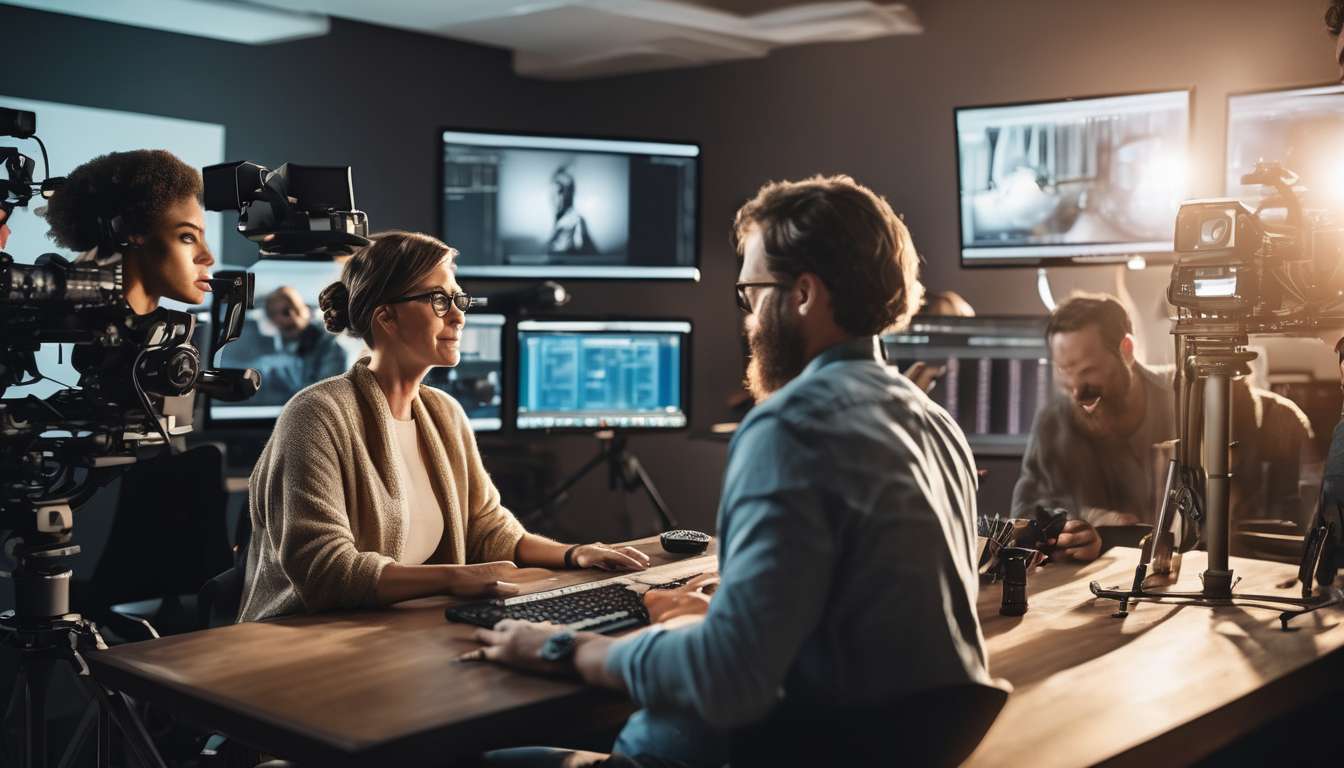
Distantly related skills—like carpentry’s precision and improv theater’s spontaneity—surprisingly shape how we build effective adult media production teams.
We draw on unexpected connections to design training that transforms individual strengths into cohesive workflows.
- A sound tech’s attention to detail becomes a project manager’s checklist.
- A photographer’s eye informs storytelling choices for editors.
We recognize that adults learn differently and that practical, cross-disciplinary exercises accelerate competence and confidence.
- Hands-on workshops.
- Mentorship pairings.
- Scenario-based problem solving.
Through these methods, we create environments where seasoned professionals sharpen technical fluency while embracing collaborative habits.
Our programs prioritize three core elements.
- Transferable techniques — skills that apply across roles and projects.
- Psychological safety — permission to experiment and fail without blame.
- Iterative feedback — regular, constructive review cycles that improve craft.
The result is teams that can navigate tight deadlines without sacrificing quality.
By treating media production as a craft informed by diverse practices, we help organizations cultivate resilient, adaptable teams capable of producing nuanced, audience-centered work.
This article outlines how targeted professional training unlocks those latent connections and yields measurable improvements in output and morale.
Transferable Skill Sets
Many technical, creative, and interpersonal skills developed on adult media production sets transfer directly to other industries and roles.
We value cross-functional training.
- Editors, camera operators, and producers rotate responsibilities to build shared understanding and respect.
- This practice makes transitions smoother when somebody moves into a different role or industry because they already speak colleagues’ languages and can anticipate workflow needs.
We rely on iterative feedback to refine processes quickly.
- Regular debriefs and short cycles of improvement keep teams aligned.
- These practices reduce costly mistakes and accelerate learning.
We prioritize psychological safety.
- People are encouraged to raise concerns, suggest changes, and admit errors without fear of retaliation.
- That culture fosters trust and sustained learning—qualities employers in any sector appreciate.
Together, these transferable skills create a strong foundation for careers beyond production:
- Adaptability.
- Clear communication.
- Collaborative problem-solving.
- Disciplined feedback loops.
We belong to a resilient community that builds capability intentionally and carries those assets wherever we go.
Cross-Disciplinary Workshops
We run focused cross-disciplinary workshops that pair camera, editing, sound, and production teams for hands-on skill‑sharing and real‑time problem‑solving.
We design sessions around cross-functional training so each person gains context beyond their job title, and we rotate roles during exercises to build empathy and practical understanding.
We keep groups small and agendas clear to maximize active learning and to honor everyone’s time and expertise.
We create routines for iterative feedback that are specific, timely, and action‑oriented, so adjustments happen on the spot and lessons stick.
We foster psychological safety by setting norms:
- Respectful questions
- Treating failure as a learning moment
- Shared accountability
We encourage participants to voice constraints and suggest improvements, which strengthens trust and collective ownership of outcomes.
We leave each workshop with a concise action list, shared references, and commitments to apply one concrete change on the next project, reinforcing belonging through tangible collaboration and mutual growth.
Mentorship Structures
We establish clear mentorship structures that pair experienced crew members with newer colleagues for regular, goal‑oriented coaching and skill demonstrations.
We design mentoring pairs and small groups so everyone feels included, rotating mentors to broaden exposure and reinforce cross‑functional training.
We set measurable goals, meeting rhythms, and short learning modules that respect busy production schedules while keeping progress visible.
We commit to iterative feedback cycles:
- Quick debriefs after shifts.
- Documented takeaways.
- Follow‑up actions that build competence and confidence.
We protect psychological safety by modeling vulnerability, inviting questions, and normalizing mistakes as learning moments.
We make space for mentees to voice needs and for mentors to ask for support, creating mutual accountability.
We track outcomes—skill gains, retention, and team cohesion—and adjust pairings and curricula accordingly.
By keeping mentorship transparent, purposeful, and compassionate, we cultivate a workplace where everyone belongs, grows, and contributes to consistently stronger productions.
Scenario-Based Drills
We run regular scenario-based drills that simulate common and rare production challenges so teams can practice responses, surface gaps, and build muscle memory without the pressure of a live shoot.
We design exercises that mix roles—producers, editors, sound, and talent—so cross-functional training becomes the norm rather than an afterthought.
We rotate scenarios from technical failures to creative pivots, keeping stakes realistic and learning objectives clear.
During drills we pause for structured debriefs and use iterative feedback to refine workflows, checklists, and handoffs.
We document small changes and repeat scenarios to measure improvement.
We make space for questions and for quieter team members to suggest adjustments, reinforcing that every perspective matters.
While we don’t delve into formal psychological safety programs here, we frame drills as experiments, not tests, so people try approaches without fear of judgment.
This steady practice builds competence, shared language, and a stronger sense of belonging across the production team.
Psychological Safety Practices
We create clear norms and practices that let everyone speak up, admit mistakes, and propose alternatives without fear of blame.
We model vulnerability by sharing lessons learned and asking questions, and we invite quieter colleagues to contribute through structured turns and inclusive prompts.
We pair cross-functional training with shared values so editors, producers, and technicians build mutual respect and understand each other’s constraints.
We set predictable meeting rhythms and brief, documented agreements about decision rights, escalation paths, and safe experimentation.
We celebrate corrections as improvements and avoid punitive language when things go wrong, keeping focus on systems rather than individuals.
We provide coaching and conflict mediation resources so people can address tensions before they escalate.
We train leaders to listen actively, normalize uncertainty, and protect contributors who raise concerns.
We document and revisit these practices regularly to ensure they remain relevant and accessible.
By embedding psychological safety into everyday routines, we cultivate a team where belonging fuels creativity and reliable production outcomes.
Iterative Feedback Loops
Short, regular review cycles
We create short, regular review cycles that let teams test edits, gather reactions, and refine work quickly.
Set clear objectives
We set clear objectives for each loop so everyone knows what to assess and why.
Inclusive participation and cross-functional training
During sessions we invite voices from all roles, using cross-functional training to make feedback specific and actionable rather than vague.
Iterative feedback as a rhythm
We emphasize iterative feedback as a rhythm, not a one-off event, so improvements accumulate and momentum builds.
Psychological safety and constructive framing
We maintain psychological safety by framing critiques as suggestions tied to goals, praising what worked, and asking open questions about alternatives.
Rotate facilitators and document decisions
We rotate facilitators occasionally to normalize giving and receiving input, and we document decisions so the group sees progress and learns from patterns.
Time-boxing and focused scope
We keep sessions time-boxed, focused on a few concrete issues, and follow up with small experiments that test proposed changes.
Outcomes: trust, skills, and belonging
By building this cadence, we strengthen trust, broaden skills, and ensure contributions are respected—so every person feels they belong and can shape the work.
Role Rotation Strategies
We rotate roles on a planned schedule so team members gain hands-on experience across editing, lighting, sound, and production coordination.
We design rotation blocks that balance learning goals with project needs, and we make sure everyone knows their next assignment in advance so transitions feel safe and predictable.
By embedding cross-functional training into each block, we broaden skills without overwhelming anyone.
We pair rotations with iterative feedback sessions so colleagues can reflect, share tips, and refine techniques together.
We emphasize psychological safety: questions, mistakes, and curiosity are welcomed, not penalized.
That environment helps people try unfamiliar tasks and give honest feedback without fear.
We keep role changes purposeful — short enough to maintain momentum, long enough to develop competence.
We assign mentors for new positions, share checklists to reduce cognitive load, and invite team input when adjusting schedules.
Our rotation strategy strengthens camaraderie, reduces silos, and builds a versatile crew that feels supported and valued.
Measuring Performance Gains
Measure performance with clear quantitative indicators.
- We track task completion time, error rates, and quality scores before and after rotations.
- We compare aggregated metrics across roles to evaluate how cross-functional training affects throughput and rework.
- We ensure everyone understands the baseline and targets, so each person feels included in the improvement journey.
Combine quantitative data with iterative qualitative feedback.
- We conduct regular feedback sessions where teammates reflect on skills gained and remaining gaps.
- We log changes in confidence, collaboration, and problem-solving, and connect those to objective outputs.
- We prioritize psychological safety so people report honest errors and suggest process fixes without fear. That openness accelerates learning cycles and helps us tune curricula.
Use short and long evaluation windows to capture trends and sustainment.
- Set short evaluation windows to detect early trends.
- Reassess at longer intervals to capture sustained change.
Outcome: clear, equitable gains that reinforce belonging and shared ownership.
By combining hard metrics, reflective input, and a culture of trust, we demonstrate measurable improvements and foster shared responsibility for team performance.
How can organizations fund or subsidize ongoing professional training for adult media production teams without relying on short-term grants?
Goal: Fund ongoing training without relying on short-term grants.
Strategy — diversify revenue streams.
- Build subscription services that provide steady recurring income and include training as a benefit.
- Offer fee-based workshops (public and corporate) to generate one-time and repeat revenue.
- Create membership tiers with learning perks (exclusive courses, office hours, peer cohorts).
Partnerships and content licensing.
- Partner with local businesses for sponsorships that underwrite training programs.
- Produce paid content and licensing (courses, toolkits, templates) for other organizations.
Financial structure to sustain training.
- Allocate a fixed percentage of earned income to a dedicated training fund.
- Implement sliding-scale fees so team members at all income levels can access development.
- Use membership and subscription revenues to cross-subsidize lower-cost or free training for the community.
Key benefits.
- Steady, predictable funding through subscriptions and memberships.
- Diverse income sources reduce dependency on grants.
- Inclusive access ensured by sliding scales and cross-subsidy.
- Community investment as members and partners have ongoing stakes in training success.
What legal or contractual considerations should be addressed when trainees contribute creative work that may be monetized by the organization?
We should clearly define ownership, licensing, and payment terms up front, so everyone feels respected and protected.
Use written agreements that state:
- Who owns copyrights.
- Whether contributors grant licenses for use or revenue share.
- How credits and royalties work.
Include the following provisions:
- Confidentiality.
- Moral rights waivers, where appropriate.
- Dispute resolution mechanisms.
Ensure compliance and flexibility:
- Compliance with labor and tax laws.
- Reversible opt-outs or buyout options to maintain trust.
How do remote or distributed production teams replicate hands-on mentorship and scenario-based drills effectively?
We ask how remote teams replicate hands-on mentorship and scenario drills, and we believe connection matters.
We structure regular live shadowing sessions, pair trainees with mentors for real-time feedback, and run interactive simulations using shared tools and role-play.
We schedule asynchronous critiques with annotated recordings, create scenario libraries, and host cohort debriefs so everyone feels supported.
We’ll iterate together, celebrate progress, and keep psychological safety central to learning.
Conclusion
You’ve seen how professional training builds transferable skills, cross-disciplinary collaboration, mentorship, scenario drills, psychological safety, iterative feedback, role rotation, and measurable performance gains.
By blending hands-on practice with supportive structures, you’ll strengthen individual capabilities and team agility.
Keep iterating on feedback, rotate roles to broaden experience, and prioritize safe spaces for risk-taking.
Doing so will help your media production team adapt faster, produce higher-quality work, and sustain continuous improvement over time.